Slick Chelsea shut down Leeds but super-clubs’ FA Cup final is symptom of wider game’s malaise — Independent 26/4/26
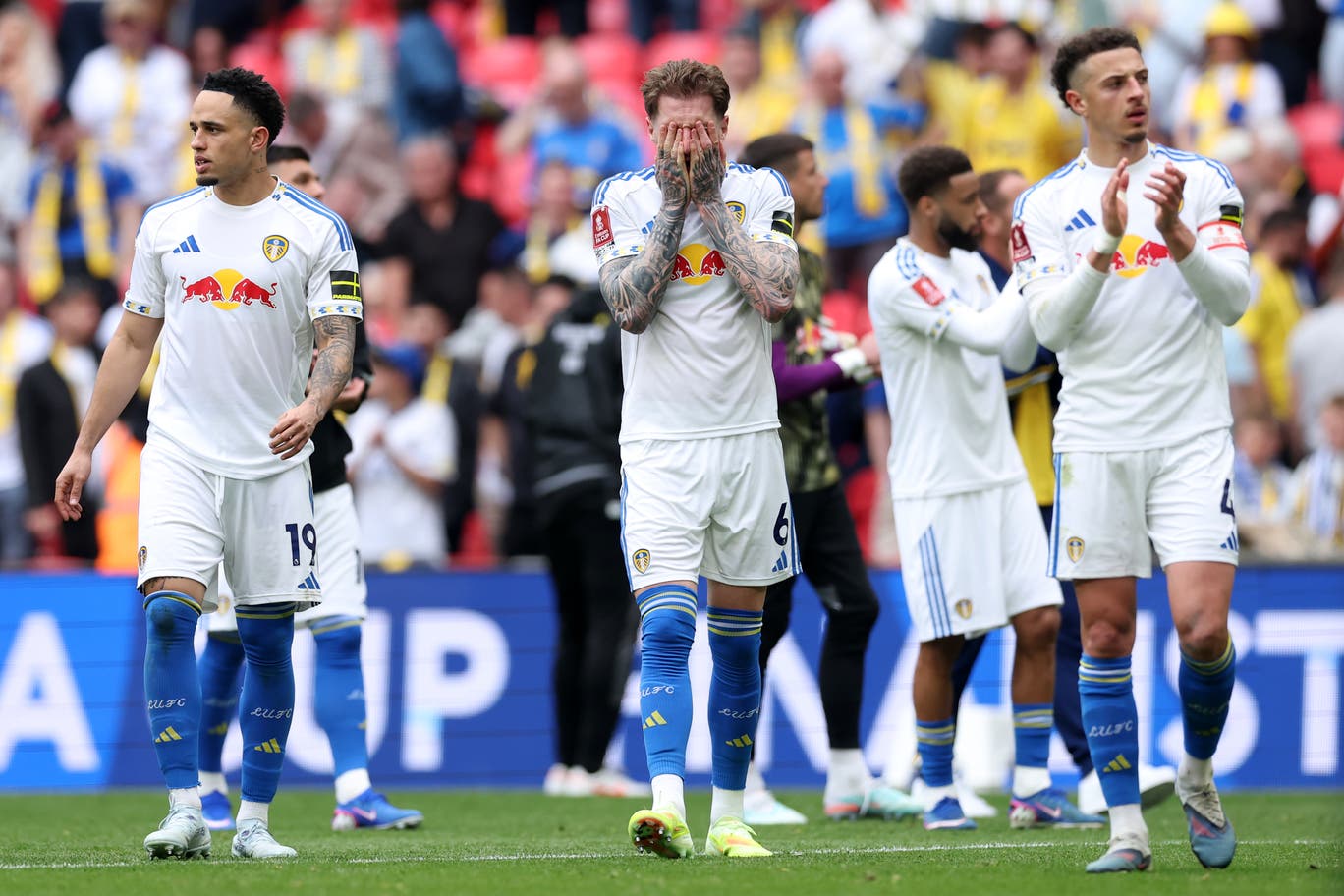
Chelsea 1-0 Leeds: Enzo Fernandez’s winner means Calum McFarlane will lead the Blues out for an FA Cup final on 16 May, just four days after replacing Liam Rosenior as head coach
Miguel Delaney Chief Football Writer, at Wembley
For an FA Cup semi-final that didn’t offer much to talk
about beyond Enzo Fernández scoring the winner, Chelsea’s 1-0 win could provoke
a lot of other discussion. Some of it served to quieten even this raucous Leeds
United crowd by the end.
By that point, you wouldn’t have thought an FA Cup final
appearance was at stake, given how quickly Wembley emptied. Another debate
could, of course, be had about staging semi-finals here. Still, there’s
something rather sorry about even the Leeds players saluting scores of empty
seats.
Maybe that just shows how professional Chelsea’s performance
had been. Outside a few spikes of activity like Brenden Aaronson’s early shot
and a piledriver from Anton Stach, Calum McFarlane’s side just shut Leeds out.
None of the energy that we’d recently witnessed from Daniel Farke’s side was
evident. Or, at least, none of it was allowed to be evident. There wasn’t even
really a late Leeds flurry.
You could say they didn’t rise to the club’s biggest
occasion in years, but that doesn’t feel fair, or true. Witness the desperate
defending when Joao Pedro almost turned in a chance just after half-time. Leeds
were clearly desperate for this. It’s just not that easy, certainly not in the
modern game. Look at the difference in expenditure.
Chelsea have generally had a miserable season where the fans
have frequently protested about the ownership, and yet here they are again in
an FA Cup final and 90 minutes from potentially winning a third trophy in a
year. This obviously isn’t to defend the ownership. It’s more of a comment on
how the modern game works.
The financial differences weren’t the only gap, though.
There was also the chasm between the discipline Chelsea displayed here and the
rabble at Brighton on Tuesday. How do you explain that? McFarlane naturally
didn’t go into too much detail, other than to say that his side needed to
“break the momentum” of the past few games and that there was a “focus”.
So, the obvious question: where was that focus for Liam
Rosenior? The transformation in performance should really be remarkable, but
is, of course, fairly routine in football. It happens a lot with a change of
managers. It isn’t all that simple, either. If players “aren’t having” a
manager, to use the vernacular, there can be all sorts of conscious and
subconscious effects. They just don’t feel as motivated, as focused, to use
some of McFarlane’s words.
The fact that Fernandez got the winner nevertheless brings a
greater symbolism, given that he is a Chelsea dressing-room leader who was the
subject of a two-game ban. He was also there shrugging his shoulders at the
fans.
Well, he knew exactly what to do here. Fernandez was
brilliant. It could be argued that one of the main differences between what
went before and this was the Argentine performing to his level, but there was,
of course, more to it.
Chelsea were just better structured, with everything just
looking like it made sense. Leeds could barely get near their goal. On the one
occasion they did, Aaronson may regret not taking the ball on further. Robert
Sanchez did save well.
Really, there were improvements in Chelsea's performances
all over the pitch. Joao Pedro, in particular, restored a verve to attack.
Although it was only 1-0, the game felt close to settled as a contest once
Fernandez plundered that header. Long stretches of it were, in truth, boring.
Chelsea didn’t allow Leeds to do anything exciting. This was admittedly aided
along by some conspicuous time-wasting, which is an issue authorities surely
have to start looking at more seriously.
And, after all that, there is then the symbolism of what
this 2026 FA Cup final will showcase. There’s no Crystal Palace this time.
Their uplifting victory naturally seems like an inevitable aberration.
Southampton-Leeds United came close to offering similar, and there’s little
doubt there would have been more meaning to such a final. Manchester City and
Chelsea have, after all, been in 16 finals between them over the past 20 years.
They’re well used to trips to Wembley, and generally have
grander ambitions. That’s all because they’re just able to spend more.
The rules seem to favour those that can afford the best
legal team which of course is the likes of the two FA final contenders. Compare
that to two of the clubs being relegated from the championship into tier 3, one
with negative points, the other former premier league champions hammered with
points deductions long since they were relegated from tier 1. What has this to
do with football? You have to wonder if teams are better off staying out of the
premier league if all that happens if you get sent to the grinder by the big
clubs and amass a mountain of debt in the process. Maybe I am naïve, as I am no
expert only it all seems rigged. Perhaps a super league is the solution so
mainstream football can be rid of the big clubs.
A wider context to this is also unavoidable, especially with
so much current football discussion. Only this season, Chelsea were punished
for breaching Premier League rules in a case that brings significant doubt over
their title wins of 2015 and 2017. They are still the subject of a related
investigation from the very organisers of this competition: the Football
Association. Manchester City are, meanwhile, still the subject of an even
further-reaching case that goes back to early 2019 and had its hearing concluded
as long ago as December 2024. The club insists on its innocence.
Regardless of the outcome, though, it is an absurdity that
the case is still ongoing, and there is no resolution. And this is what
surrounds English football’s great traditional occasion. Before this
semi-final, Chelsea fans were enduring an utterly miserable season, and yet
they now have a day Leeds can only dream about.